
There’s a question we ask every organisation we work with, usually early in our relationship, and it tends to land with a particular kind of silence.
“Who is your inclusion strategy actually for?”
Not who it’s designed to help in theory. Not whose name appears in the policy document. In addition, who benefits from the way inclusion is currently lived in your organisation.
The answer, when leaders are honest, reveals more about organisational culture, leadership maturity and institutional values than almost any other question I know.
Here’s what most organisations haven’t fully reckoned with yet: your inclusion strategy isn’t just a set of initiatives. It’s a signal. It tells your employees, your talent pipeline and your customers exactly what you believe about people: who matters, who belongs, and how much you’re genuinely willing to change.
So let’s look at what yours might be saying.
1. “We measure everything”: The Data-Driven Approach
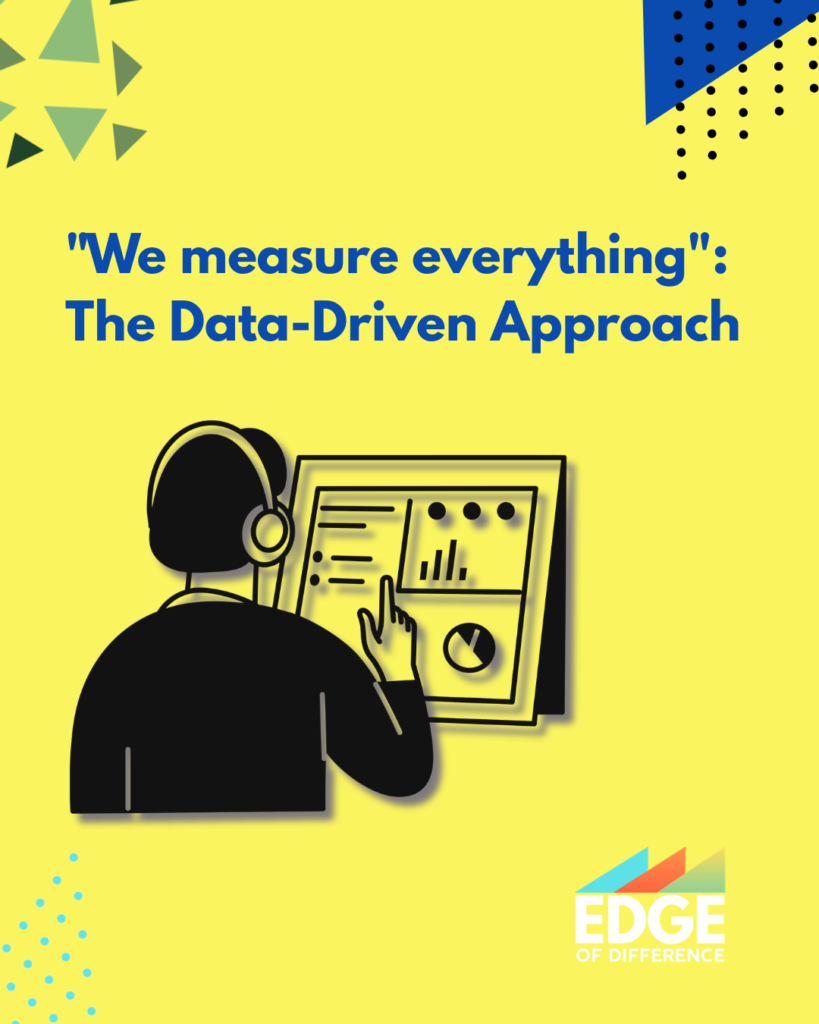
If your inclusion strategy lives in dashboards, representation targets and quarterly scorecards, there’s a lot to admire. You’re treating inclusion with the same rigour as financial performance. You understand that what gets measured gets managed. In a landscape where many organisations still operate on instinct and goodwill, that’s genuinely sophisticated.
But data-driven inclusion has a shadow side that high-maturity organisations are only beginning to reckon with.
You can hit every target and still have a culture where people don’t feel they belong. You can close your gender pay gap on paper while women in your organisation quietly absorb a thousand small exclusions every week. Numbers tell you who is in the room.
They don’t tell you whether those people feel safe enough to speak, to challenge, or to bring their full selves to work.
What this approach says about you: You take inclusion seriously and you’re willing to be accountable. Therefore, the question is whether you’re willing to go beyond what’s measurable to what’s felt.
The next step isn’t more data. It’s deeper listening.
2. “Our people lead the way”: The Employee-Led Approach
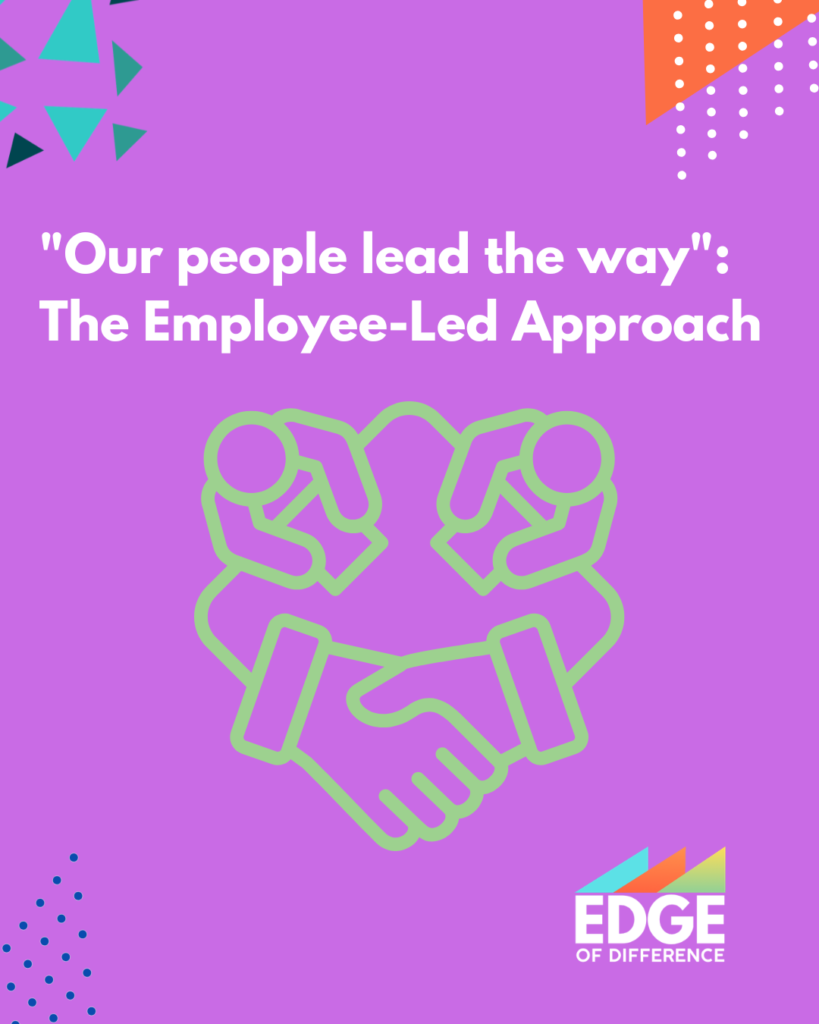
Employee Resource Groups. Listening forums. Peer-led inclusion networks. If this is the backbone of your strategy, you’ve made a significant commitment to belonging. You believe that change should come from within, that lived experience matters and that the people most affected by exclusion should have a voice in dismantling it.
That instinct is right. And it’s also, if you’re not careful, where inclusion strategies quietly collapse.
Here’s the uncomfortable truth: when organisations rely primarily on Employee Resource Groups to drive inclusion. However, they are, often unintentionally, asking marginalised employees to carry the structural weight of change that should sit with leadership. The Black employee expected to educate colleagues on race. The disabled colleague asked to lead the accessibility working group. The LGBTQ+ staff member fronting every Pride initiative. All while doing their actual jobs.
Employee voice is essential. It is not a substitute for leadership accountability.
What this approach says about you: You value belonging and you’re genuinely listening. But listening without acting, and without resourcing and recognising the people doing the work…risks becoming extraction dressed up as empowerment.
If your inclusion strategy depends on unpaid emotional labour from the people it’s supposed to serve, it’s not a strategy. It’s a transfer of responsibility.
3. “Our leaders walk the talk”: Visible Leadership Action
This is the approach that moves organisations. Senior leaders should be publicly, personally and consistently committed to inclusion. They need to speak honestly about their own blind spots, hold other leaders accountable and model the culture they want to build, inclusion stops being an HR initiative and starts becoming organisational identity.
The research is unambiguous on this. Inclusion that is visibly championed at the top is more trusted, more sustained and more likely to survive economic pressure, leadership changes and the inevitable moments when it becomes commercially inconvenient.
But there is a risk even here: personality dependency. Inclusion is fragile when it is carried by one exceptional leader. It outlasts only as long as that person does.
What this approach says about you: You have something genuinely rare. A leader who has made inclusion part of their identity, not just their job description. Now the work is to make sure the culture outlasts them.
Inclusion led by one brave voice is progress. Inclusion embedded in systems is transformation.
4. “We’ve done the training”: The Compliance-Led Approach
Let’s be direct here, because this profile deserves honesty more than comfort.
If your inclusion strategy is primarily driven by legal obligation, external audit or reputational risk management, if the honest answer to “why are you doing this?” is “because we have to”, then your employees already know. They can feel it.
People are good at reading the gap between stated values and lived reality. The compliance-led organisation has a policy for everything and accountability for nothing. Mandatory unconscious bias training that changes no structural decisions. A diverse recruitment shortlist that somehow always produces the same hire. An inclusion statement on the website that bears no relationship to what happens in the building.
The cost of staying at compliance level is both ethical and commercial. Low trust among marginalised employees leads to disengagement, and disengagement leads to attrition. And replacing the talent you failed to retain costs far more than the genuine inclusion strategy you declined to invest in.
What this approach says about you: You are managing risk, not driving change. Your employees, particularly those from marginalised groups, are not confused about the difference.
Your people don’t read your inclusion policy. They read the room.
5. “We bring people together”: The In-Person Events Approach
This is perhaps the most well-intentioned profile on this list, and in some ways the most important to address with care; because the harm here is rarely deliberate.
Organisations that build their inclusion strategy around in-person events, office socials and face-to-face engagement genuinely want connection. They want their people to feel part of something. That impulse is good. But when inclusion is built entirely around one mode of engaging, loud, social, physical, in-room, it quietly tells a significant portion of your workforce that belonging here requires them to mask who they are.
The neurodiverse colleague for whom open-plan socials are genuinely overwhelming. The carer who cannot stay late. The introvert who does their best thinking in writing, not in rooms. The remote worker who is never physically present. For all of these people, an inclusion strategy built on proximity is not inclusion. It’s an invitation that doesn’t quite reach them.
What this approach says about you: Your intentions are good and your instincts toward community are right. But inclusion built around majority norms, however warmly, excludes by default.
If your inclusion strategy only works for people who work, socialise and process the world exactly like you do, who is it actually for?
Conclusion: So, what Does Your Inclusion Strategy Say About You?
Most organisations will recognise themselves in more than one of these profiles. Inclusion strategy is rarely pure. It’s usually a combination of genuine intent, inherited practice, resource constraint and cultural inertia. The point isn’t to find the perfect category. It’s to be honest about what your current approach reveals, and what it might be costing you.
The organisations that are getting inclusion right, truly right, not just compliantly right, share one characteristic above all others. They are willing to be uncomfortable. Willing to ask not just “what are we doing?” but “who does this actually serve?” Willing to sit with the gap between their values and their reality long enough to do something meaningful about it.
Inclusion is not a destination. It is a practice. And like any practice, what you put in is visible. To your people, to your talent pipeline, and increasingly, to the market.
The question isn’t whether you have an inclusion strategy. It’s whether it’s telling the story you think it is.
At Edge Of Difference, we help organisations, especially within leadership, create Diversity, Equity and Inclusion plans whose impact is meant to last. To co-create an inclusive culture, setting your Diversity, Equity and Inclusion goals up for success.
Go to the edges with us and turn those differences into action. Download our differences guide