Culture Shocks Or Culture Rise? What Will Break or Build Inclusion in 2026
Workplace culture is shifting faster than many leaders realise. In 2025 we saw a rise in cultures clashing, employee expectations changing, and leaders facing new pressures to respond. Conversations that once felt too sensitive or too complex for the workplace are now happening every day. These tensions are shaping how people feel, how teams perform, and how inclusive workplaces really are.
We analysed what happened across 2025, what organisations told us, and what current research reveals about the future of inclusion. From this, we identified the top 15 culture shocks that will shape 2026. These are the trends that will break or build inclusion in the year ahead.
The rise of culture clashes in the workplace
Across sectors, people are talking more openly about the issues affecting their lives. Global conflicts, political divides, economic pressure and identity-based challenges are showing up in meetings, Slack channels and employee surveys. These conversations can feel difficult, but ignoring them undermines trust and belonging.
Leaders who avoid these conversations risk creating a culture where people feel unheard and unsafe. Leaders who engage with curiosity and openness can turn clashes into opportunities for understanding and inclusion.
Are culture clashes leading to more inclusion?
With so many conflicting opinions and lived experiences, a key question is emerging. Are these tensions driving people further apart, or are they pushing organisations to become more inclusive?
We are seeing organisations recognise the importance of listening. Teams are starting to value different perspectives, and leaders are being forced to rethink how they respond to employee voice. In some workplaces, this is creating the conditions for a genuine rise in inclusion.
But only if leaders act.
The 15 trends shaping inclusion and workplace culture in 2026
We started with a long list of emerging inclusion and culture trends. From that list, we selected the 15 most significant culture shocks that leaders need to understand.
These trends cover:
- Employee activism and employee voice
- The shift from inclusion to belonging that drives performance
- AI bias and the risks of automated decision making
- Changing employee benefits and expectations
- What people now look for when choosing a new employer
- New power dynamics affecting leadership and data ownership
- Inclusion fatigue and the demand for visible accountability
- The future of skills, talent and leadership development
Everything points to one truth. 2026 will be a year of disruption, innovation and cultural change.
Are you ready for the cultural shifts ahead?
Power structures will change. Leadership expectations will evolve. Inclusion will move from a value to a performance driver. Cultures that ignore these shifts will struggle to attract and retain diverse talent. Cultures that respond with honesty, care and curiosity will rise.
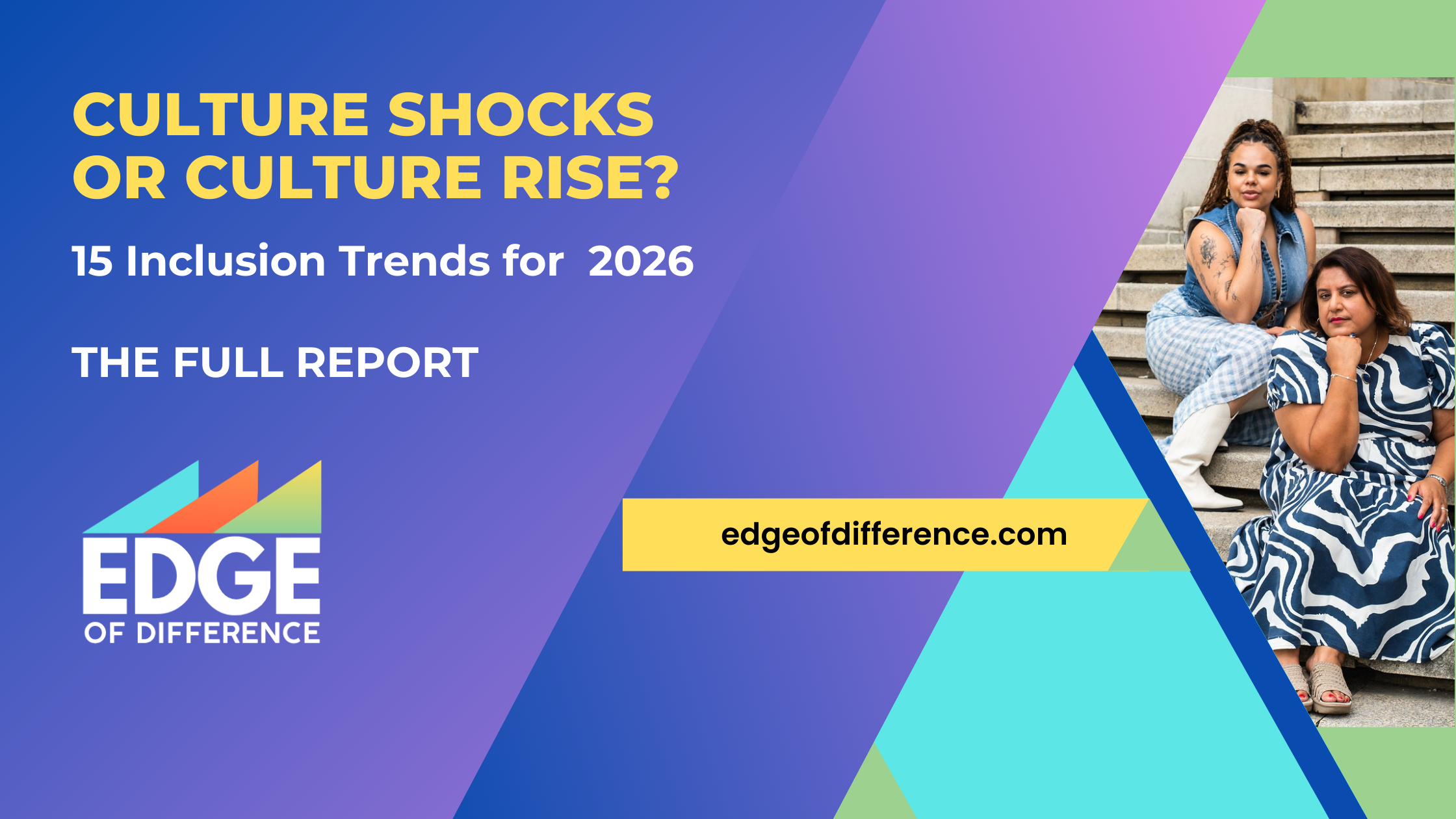
Our new report names the 15 culture shocks already reshaping workplaces and the shifts that leaders cannot afford to ignore. It gives you the insights, questions and actions you need to understand where your culture stands